University of Luxembourg · EU Digital Sovereignty · class 5
EU strategy for data, in production
Every new right of access the EU creates is a new interface, and every new interface is a new attack surface. This guest lecture reads the Data Governance Act and the Data Act as engineering specifications, through three cases and four failure modes, for a mixed room of lawyers and engineers.
- Tuesday 20 October 2026, 15:30 to 17:00
- Campus Kirchberg, University of Luxembourg
- In English (slides also in French and German)
- Public slides and speaker notes
The slides, open to everyone
The whole deck is public: it opens in reading mode with the speaker notes under each slide, and every slide is also printed below as text. Each legal slide carries its source line; every article was checked against the Official Journal on 17 October 2026.
PDF: from the slides, PDF button, after signing in with Google (as for the other courses).
Plan of the lecture
Overview
A right with no SDK; the argument of the hour; how to read the slides; the plan of the afternoon.
The two instruments, in engineering terms
Data Governance Act vs Data Act; the three roles of the DGA; the Data Act read as a backlog; the Digital Omnibus proposal.
Three obligations turned into architecture
Cloud switching and the 12 January 2027 deadline; foreign government access under Article 32; access to product data under Articles 3 to 5.
Where it breaks in production
Identity, evidence, quality, the personal data boundary; GDPR, NIS2, DORA and AI Act logs; a checklist; four misreadings.
Your questions
A law-to-engineering glossary, four questions worth arguing about, and where to read the texts properly.
The deck, slide by slide
The full text of every slide and the speaker notes, as read in class. Each title opens the slide in the deck.
Slide 2: A right with no SDK
Regulation (EU) 2023/2854, Chapter II · applicable since 2025-09-12
On the slide: Since 12 September 2025, the user of a connected product in the EU can ask for the data that product generates.
Interface
Who builds it?
The regulation grants a right. It ships no API.
Identity
Who authenticates the asker?
Proving that a person owns a machine is not a solved problem.
Evidence
Who keeps the proof?
An obligation you cannot show you met is one you failed.
Expiry
Who revokes it?
Every grant needs an end date. Most designs forget it.
Data Act, Art. 4 and 5 · Art. 50 application date · eur-lex.europa.eu/eli/reg/2023/2854/ojSpeaker notes
The Data Act gives the users of connected products (a car, a tractor, a smart meter, an industrial robot) a right to access the data their use of the product generates, and to have it shared with a third party of their choice. It has applied since 12 September 2025 (Article 50).
The four questions on the slide are not legal questions. No article tells you how to authenticate the person asking, where the evidence of a disclosure is kept, or when a delegation expires. They land on an engineering team. That gap between a right and its implementation is the subject of this hour.
Notice the chain behind the first question: the manufacturer, its supplier, its cloud provider, its contract manufacturer in another jurisdiction. Responsibility is legal; the work is distributed.
Slide 3: Where the data comes from
Connected products, related services, and the people who use them
On the slide: A smart meter: consumption, every half hour.
A connected car: position, speed, faults, alerts.
A wind turbine: vibration, yield, maintenance.
Data Act: Art. 2(5) connected product · Art. 2(6) related service · Art. 4 user accessSpeaker notes
Three ordinary machines. Each one produces data through its use: a meter's consumption curve, a car's position and fault codes, a turbine's vibration and yield. Until now, that data went to the manufacturer or to the operator of the related service, and the user saw what the app chose to show.
Since 12 September 2025, the person who uses the product can ask for that data, and have it sent to a third party of their choice. Keep these three pictures in mind: every case in this lecture ends up on a machine like one of them.
Slide 4: The argument of this hour
On the slide: Every new right of access the EU creates is a new interface. Every new interface is a new attack surface.
So the Data Act is not only a legal text. Read closely, it is an architecture specification with a compliance deadline attached.Speaker notes
This is the claim the rest of the lecture tries to earn. The GDPR already taught the lesson: the right of access (Article 15) and the right to data portability (Article 20) created subject access pipelines, and attackers learned to use them, for instance by impersonating a data subject to obtain someone else's data.
The Data Act creates access rights over machine-generated data, at a far larger scale, with industrial systems attached. Three cases below show where this is already true, and four failure modes show where it breaks in production.
Slide 5: How to read these slides
A mixed room, lawyers and engineers: three typefaces, three voices
On the slide: What the text says
Aa
Obligations and rights, paraphrased from the regulation. Set in a serif, like a statute.
Providers shall take measures to prevent unlawful access.
What someone builds
Aa
The engineering reading: components, controls, evidence. Set in a sans, like a design document.
Key custody, refusal workflow, request log.
What you can cite
Aa
Articles, regulation numbers and dates, in ISO format so they sort. Check them yourself.
Art. 29(1) 2027-01-12
The engineering column is a practitioner's reading, not legal advice. When the two disagree, the text wins.Speaker notes
This class mixes two disciplines that read the same regulation very differently. To keep them apart on screen, every slide uses the same convention: serif type for what the legal text says, sans-serif for the engineering consequence, typewriter type for anything you can look up and cite.
The legal sentences are paraphrases, kept close to the text. Before quoting any of them in an assignment, read the article in the Official Journal: Regulation (EU) 2022/868 for the Data Governance Act, Regulation (EU) 2023/2854 for the Data Act.
Slide 6: Your guest lecturer
Who is talking, and from where
On the slide: Sitraka Forler
A practitioner who reads regulations from the engine room.
Data and AI practitioner in Luxembourg: data platforms, machine learning, systems architecture
Lecturer at IAE Metz and at Centrale Méditerranée (Centrale Marseille)
Columnist, AGEFI Luxembourg
Presented in a personal capacity. Nothing here represents the position of any employer, and none of it is legal advice.Speaker notes
I build and run data systems for a living, and I teach machine learning and data analytics to engineering and management students. That is the angle of this hour: not what the regulation means for a court, but what it asks a team to build, operate and prove.
Everything in this deck is my own reading, in a personal capacity. For a real decision, read the article and ask counsel.
Slide 7: In my own name
On the slide: I speak in my own name only, not on behalf of my employer.
These slides are my reading as a practitioner. They are not legal advice, and they commit no organisation I work with.Speaker notes
One sentence before the content, because this room mixes lawyers and engineers and some of you will quote me. Everything in this hour is my own reading, given in a personal capacity. It does not represent the position of my employer or of any client, and it is not legal advice: for a real decision, read the article in the Official Journal and ask counsel.
Slide 8: Picking up from the 14:15 presentation
Before we start: what the group presentation already covered
On the slide: The group presentation at 14:15 walked through the texts: what they say, who they bind, when they apply.
Their question was the law. This hour is about what the law makes somebody build .
The Kirchberg plateau, seen from Pfaffenthal: the European institutions, and today's campus.Speaker notes
The class opened at 14:15 with a group presentation on the same texts. This lecture builds on it rather than repeating it: the instruments are recalled briefly, and most of the time goes to implementation.
Pick up one sentence from their presentation here, and the question it left open that this hour continues.
Slide 9: This afternoon
One hour of lecture, then thirty minutes of questions
On the slide: Time · Part · Length
15:30 · Why an engineer is reading two regulations · 7 min
15:37 · The two instruments, in engineering terms · 15 min
15:52 · Three obligations turned into architecture · 22 min
16:14 · Where it breaks in production · 16 min
16:30 · Your questions, including the ones I cannot answer · 30 min
Interrupt at any point. A question asked when it occurs to you is worth three asked at the end.Speaker notes
Four parts, then the questions. Questions are welcome during the lecture too: a question asked when it occurs to you is worth three asked at the end.
Slide 10
The two instruments, in engineering terms
By the end of this part you should be able to say what each text makes somebody build.
Fifteen minutes on the two texts, recalled briefly because the 14:15 group already presented them. The aim is one sentence per text: what it makes somebody build.
Slide 11: Two texts, two different jobs
Dates as published in the Official Journal · status on 17 October 2026
On the slide: Data Governance Act 2022/868 · Data Act 2023/2854
In force · 2022-06-23 · 2024-01-11
Applies · 2023-09-24 · 2025-09-12
Posture · Enabling: creates roles and a trust framework · Prescriptive: creates rights and hard obligations
Real question · Who may act as a trusted go-between? · Who may read, move and port machine data?
Status · Proposed for repeal · Applies Amendment proposed
Luxembourg · Law of 19 December 2025: CNPD supervises intermediation and altruism · Bill 8809 , pending: ILR leads, CNPD for personal data
DGA Art. 38 · Data Act Art. 50 · repeal proposed in COM(2025) 837 · eur-lex.europa.euSpeaker notes
The row that matters is posture. The Data Governance Act is permissive: it offers a status (data intermediation service, data altruism organisation) with conditions, and almost nobody was forced to do anything. That is why, as engineering work, it changed little in most organisations.
The Data Act is the opposite. It tells manufacturers, cloud providers and data holders what they must now make possible, whether they want to or not. That is why it has a budget line.
In Luxembourg, the Data Governance Act is implemented by the law of 19 December 2025 (bill 8395A): it creates the Commissariat du Gouvernement à la souveraineté des données for the re-use of protected public data, and makes the CNPD the authority for data intermediation services and the register of data altruism organisations. The Data Act implementing law is bill no. 8809, filed on 28 July 2026 and still in committee: it designates the Institut Luxembourgeois de Régulation (ILR) as competent authority and data coordinator, the Commissariat for Chapter V, the CNPD for personal data, and sets fines in tiers up to one million euros. Source: Chambre des Députés, dossiers 8395A and 8809.
Dates: the Data Governance Act entered into force on 23 June 2022 and applies from 24 September 2023 (Article 38). The Data Act entered into force on 11 January 2024 and applies from 12 September 2025 (Article 50).
Slide 12: The text, and the explanation of the text
Only the Official Journal is authentic; the rest helps you read it
On the slide: EUR-Lex: Regulation (EU) 2023/2854, OJ L of 22.12.2023, its ELI and the authentic PDF in 24 languages.
The Commission's Data Act page: FAQ, helpdesk, explainers. Useful, and not binding.
Cite the regulation by its ELI: eur-lex.europa.eu/eli/reg/2023/2854/oj · Commission FAQ of 2024-09-06Speaker notes
Two pages you will use all the time, and they do not have the same status. On the left, EUR-Lex: the regulation as published in the Official Journal, with its European Legislation Identifier (ELI) and the authentic PDF in every official language. That is the text a court reads.
On the right, the Commission's Data Act page, with frequently asked questions (published on 6 September 2024), a helpdesk and explainers. They are very good for understanding the intent, and they bind nobody. When an engineering decision rests on a sentence, check that the sentence comes from the left-hand page.
Slide 13: The Data Governance Act creates three roles
Regulation (EU) 2022/868, Chapters II to IV · Article 31 on international access
On the slide: Re-use of protected public data Ch. II
Public bodies may open data that is confidential, commercially sensitive or personal, under conditions.
You build
Secure processing environments, anonymisation pipelines, an access workflow with an audit trail.
Data intermediation Ch. III
A notified, supervised status for neutral go-betweens matching data holders and users.
You build
Structural separation: the broker may not use the data it brokers. An isolation boundary you must prove.
Data altruism Ch. IV
A register for organisations collecting data donated for objectives of general interest, such as research.
You build
Granular, revocable consent, and a record of the purpose each record was donated for.
DGA Art. 3 to 9 · Art. 10 to 15 (Art. 12 conditions) · Art. 16 to 25 · Art. 31Speaker notes
Every legal role has an engineering consequence. Structural separation is the interesting one for a security audience: it is not a policy you write, it is an isolation boundary you have to demonstrate. Article 12 requires the intermediation service to be provided through a separate legal person, and the provider may not use the data for other purposes. In practice: separate credentials, separate stores, separate staff, and an auditor who will ask you to show that an engineer on the brokerage side cannot read the brokered payloads. That is a threat model, not a privacy notice.
Uptake of the intermediation status has been low across the EU, which is one of the reasons the Commission proposed to fold this text into the Data Act (two slides on).
Article 31 of the Data Governance Act already contains safeguards against unlawful access by third-country authorities to non-personal data. You will meet the same logic in Article 32 of the Data Act.
Slide 14: The Data Act, read as a backlog
Regulation (EU) 2023/2854 · simplified: read the articles before relying on a row
On the slide: Where · What it grants · What somebody builds
Ch. II · Users access the data their connected product generates, and share it with a third party · An authenticated access interface, by design, documented before sale
Ch. III · Fair, reasonable and non-discriminatory terms for making data available · Metering, pricing logic, trade secret protection around the payload
Ch. V · Public bodies may request private data in exceptional need · An escalation path, a legal gate, extraction that does not hand over everything
Ch. VI · Customers may leave a cloud provider with their data and functions · Export formats, functional equivalence, a tested exit runbook
Art. 32 · Safeguards against unlawful third-country access to non-personal data · Key custody, jurisdiction mapping, a documented refusal procedure
Ch. VIII · Interoperability of data spaces; rules for smart contracts · Published schemas, and a way to stop automated executionSpeaker notes
Three rows deserve attention. Chapter II: "by design, documented before sale" is the expensive phrase. The obligation lands at product definition, not at a compliance review two weeks before launch. Under Article 3(1), it applies to connected products and related services placed on the market after 12 September 2026 (Article 50).
Chapter VI, switching: this is the row with a date on it, twelve weeks from today (case one). Article 32: the sovereignty row, and the only one that can put an engineer in a genuine conflict of laws (case two).
The right-hand column is an engineering reading of the text, not the text. Unfair contractual terms (Chapter IV) are left out of the table: little engineering, large commercial impact. Smart contracts for executing data sharing agreements must, among other things, allow safe termination or interruption (Article 36).
Slide 15: One of the two texts is proposed for repeal
Procedure 2025/0360(COD) · state of play on 17 October 2026
On the slide: Date · Step · What happened
2025-11-19 · Commission proposal · The Digital Omnibus, COM(2025) 837, would repeal the DGA and move intermediation and altruism into the Data Act.
2026-06-22 · Parliament draft report · Joint ITRE and LIBE committees; amendments tabled in July. No committee vote yet.
2026-10-20 · Today · A proposal, not law. The DGA and the Data Act both apply as published.
2026-10-21 · Council mandate · On the Coreper agenda for tomorrow. No mandate adopted so far, no trilogue.
Build capabilities, not article numbers.
Check the procedure file before citing a status: oeil.secure.europarl.europa.eu · 2025/0360(COD)Speaker notes
The syllabus says Data Governance Act 2022 and Data Act 2024, and that is correct today. But the Commission's Digital Omnibus proposal of 19 November 2025, COM(2025) 837, would repeal the Data Governance Act (together with the Free Flow of Non-Personal Data Regulation, keeping its ban on data localisation requirements, and the Open Data Directive) and move intermediation and altruism into a new chapter of the Data Act, with voluntary registration. Business-to-government access in Chapter V would be narrowed to public emergencies, and custom-made cloud services and smaller providers would get a lighter switching regime for contracts concluded before 12 September 2025.
State of play on 17 October 2026, from the Legislative Observatory and the Council register: the joint ITRE and LIBE draft report is dated 22 June 2026, amendments were tabled on 27 July, and the committees have not voted. In the Council, no negotiating mandate has been adopted; the Coreper agenda of 21 October 2026 lists the mandate for negotiations. It is a proposal, not law.
The engineering conclusion: a compliance architecture that hard-codes one text is technical debt with a legal name on it. What survives a rewrite is the capability: can you identify your data, can you move it, can you prove who touched it.
Slide 16: Check the procedure file, not the press
The Legislative Observatory, procedure 2025/0360(COD), seen on 17 October 2026
On the slide: Status: awaiting committee decision. Below the title, every act the proposal would repeal or amend. One proposal, many texts: it would repeal Regulation 2022/868 and amend the GDPR, NIS2, DORA and the Data Act.
A status in a slide ages in a week. The procedure file is the source.Speaker notes
This is the page I read before each update of this deck. The status line says where the file stands: on 17 October 2026, awaiting a committee decision in Parliament. Under the title, the list of acts the proposal touches is itself a lesson: it would repeal the Data Governance Act, the Free Flow of Non-Personal Data Regulation and the Open Data Directive, and amend, among others, the GDPR, NIS2, DORA and the Data Act.
Press articles are useful to know that something moved. The procedure file and the Council register tell you what actually moved.
Slide 17
Three obligations turned into architecture
Cloud switching. Foreign government access. Access to product data.
Twenty-two minutes, three cases: cloud switching (Chapter VI of the Data Act), foreign government access (Article 32), access to product data (Chapters II and III). Each case goes from the text to the system it requires.
Slide 18: Case 01: the exit
Case 01 · a data platform leaves its cloud provider
On the slide: A data centre at Bissen, Luxembourg (LuxConnect): where a workload physically runs.
Racks and cables: the easy half of an exit is moving bytes; the hard half is everything wired around them.Speaker notes
First case: a company decides to leave its cloud provider, or simply needs to be able to. The question is concrete: what can we take with us, how long does it take, and what does it cost. The Data Act answers part of it in Chapter VI, with dates.
The left photo is a Luxembourg data centre at Bissen, run by LuxConnect, the kind of building where regulated workloads of the financial centre actually sit. The right one is the inside of any data centre: cables, racks, and a dependency graph nobody drew completely.
Slide 19: Leaving your cloud provider should cost nothing
Case 01 · Regulation (EU) 2023/2854, Chapter VI, Articles 23 to 31
On the slide: 2027
01-12 84 days from today
From this date, providers of data processing services may not impose switching charges on a customer who leaves.
Art. 29(1) · paraphrase
Until then, charges are capped at the provider's costs directly linked to the switching.
Art. 29(2) and (3)Speaker notes
Article 29 phases switching charges out. From 11 January 2024 to 12 January 2027 a provider may impose reduced switching charges, which may not exceed the costs incurred by the provider that are directly linked to the switching process. From 12 January 2027 it may impose none. This is not a consultation or a guideline: it is a dated provision in a regulation that already applies.
Two nuances. The regulation distinguishes switching charges from the ordinary price of the service, which stays. And the Omnibus proposal would carve some custom-made services under contracts concluded before 12 September 2025 out of certain switching duties.
A question to keep in mind: who in this room has moved a production workload between two cloud providers, and how long did it take?
Slide 20: The switching clock
What each date asks of a platform team
On the slide: 2024-01-11
2025-09-12
2026-10-20
2027-01-12
Entry into force
The Act applies
Today
Charges fall to zero
Charges may not exceed
directly linked costs.
Contracts state the switching
process, the assistance owed,
the transition period.
Eighty-four days left.
The lock-in that paid for
a decade of shortcuts
stops working.
Transition
30 days
maximum transitional period in the contract Art. 25(2)(a)
Notice
2 months
maximum notice period for the customer Art. 25(2)(d)
Parallel use
at cost
egress charges may only pass on costs incurred Art. 34
In parallel Financial entities already owe exit strategies under DORA Art. 28(8) . Same engineering, two legal drivers.Speaker notes
The timeline reads left to right. The third mark is today: eighty-four days between this lecture and 12 January 2027. Since 12 September 2025, the contract must describe the switching process, the assistance owed, and a maximum transitional period of 30 calendar days, with a notice period of at most two months for the customer (Article 25).
In Luxembourg the last line matters most. Banks, fund administrators and other financial entities are also under DORA (Regulation (EU) 2022/2554), which requires exit strategies for ICT services supporting critical or important functions (Article 28(8)). In practice you will meet one project with two regulators behind it.
A contested question worth arguing about: who benefits most from free switching? Customers, obviously. But also the largest providers, who can afford to absorb the cost of winning somebody else's customer. Regulation does not always move power where it intended.
Slide 21: What "reversible" costs
A free exit is not the same as a possible exit
On the slide: Data is the easy half
Open, documented, machine-readable exports. Not a proprietary dump that only the vendor can restore.
Functions are the hard half
Managed queues, identity services and serverless runtimes rarely have an equivalent elsewhere.
The runbook must be tested
An exit plan never executed is a document, not a capability. Rehearse it yearly on one workload.
Observability is the blind spot
Dashboards, alert rules, traces and retention live in the provider's tooling. You arrive blind.
If the contract ended in ninety days, what could we not rebuild?
Data Act Art. 30 functional equivalence (infrastructure services) and open interfacesSpeaker notes
The Data Act asks infrastructure providers (IaaS) for functional equivalence after switching (Article 30(1)), and asks providers for exportable data in structured, commonly used and machine-readable formats. Data is the easy half. Functions are harder: a proprietary queue, identity service or serverless runtime has no drop-in equivalent.
The part most migrations forget is telemetry. You can move a workload in a weekend. Rebuilding the alert rules, dashboards, trace sampling and retention policies that tell you the workload is healthy takes months, and until then you are operating a critical system without instruments.
An exit capability is also a security control: it bounds the blast radius of a supplier failure or a jurisdictional shock.
Slide 22: Case 02: the order from abroad
Case 02 · a foreign authority orders access to data held in the Union
On the slide: A hardware security module (nCipher nShield F3): the keys live here, not in the application. A court in a third country orders a provider to hand over non-personal data stored in the EU.
Whether the provider can comply depends less on where the data sits than on who holds the keys.Speaker notes
Second case: an order from a third-country court or authority reaches a cloud provider, asking for non-personal data stored in the Union. Article 32 of the Data Act tells the provider what it must do to prevent unlawful access, and when such an order can be recognised.
The photo is a hardware security module, a card that generates and keeps cryptographic keys so that the application never sees them. Keep it in mind for two slides from now: custody of the keys is the control that changes the answer.
Slide 23: When a foreign authority asks for EU data
Case 02 · Regulation (EU) 2023/2854, Article 32 · international access and transfer
On the slide: The text Art. 32
Providers must take technical, organisational and legal measures to prevent transfer of, or governmental access to, non-personal data held in the Union where it would conflict with EU or national law.
A foreign order is enforceable only on the basis of an international agreement, or after a reasoned, proportionate and reviewable process.
The system 4 controls
Key custody outside the provider's reach
A map of every entity and person that can be compelled
A documented refusal and escalation procedure
A log of every request received, and of the answer
Where are your keys, and who can be compelled to hand them over?Speaker notes
Article 32(1) obliges providers of data processing services to take adequate technical, organisational and legal measures, including contracts, to prevent international and third-country governmental access to and transfer of non-personal data held in the Union where it would conflict with Union or national law.
Article 32(2) and (3): a decision of a third-country court or authority requiring such a transfer or access is recognised or enforceable only if based on an international agreement, such as a mutual legal assistance treaty. Without one, the provider may comply only where the third-country system requires the decision to be reasoned and proportionate, the order to be specific, and the provider's reasoned objection to be reviewable by a competent court there.
Article 28 adds a transparency duty: providers must publish on their website the jurisdiction to which their infrastructure is subject, and a general description of their measures against unlawful governmental access. That is where the questions about keys start.
The engineering reading is on the right. Encryption alone does not settle the question: if the provider holds the key, the provider can be ordered to use it. That is why the next slide looks at control, not location.
Slide 24: Sovereignty is a chain of control, not a map
Five places a foreign order can land
On the slide: Layer · What decides it
L1 · The parent company · Ownership reaches across borders. An EU subsidiary may still answer to a group decision.
L2 · The operating entity · Which legal person signs the contract, and under whose law it can be ordered to act.
L3 · The privileged staff · Administrators have passports and employers. Compulsion reaches people, not data centres.
L4 · The infrastructure · Where the bytes rest. The layer everyone discusses, and the weakest guarantee of the five.
L5 · The keys · If the provider can decrypt, it can be ordered to. Custody, not location, is the control.
A reading aid, not legal advice. A real assessment needs the contract, the group structure and counsel in both jurisdictions.Speaker notes
Read the five layers from top to bottom. Data residency (L4) is what most marketing talks about, and it is the weakest of the five guarantees: a compelled administrator (L3) or a parent company (L1) can reach data wherever it physically sits.
The only layer that changes the answer on its own is L5. If the customer holds the keys, in a hardware security module the provider cannot operate, an order to the provider produces ciphertext.
On 3 June 2026 the Commission proposed a Cloud and AI Development Act, COM(2026) 502, whose Article 16 sets up a Union cloud computing sovereignty framework with assurance levels. A useful exercise: for each of these five layers, ask whether such a label could actually verify it.
Slide 25: Case 03: the tractor's data
Case 03 · a farmer asks for the data of her tractor
On the slide: A tractor at work: engine hours, positions, yields, all logged by the machine. The farmer wants her machine's data sent to an independent agronomist.
The manufacturer must make it possible, securely, for a recipient it did not choose.Speaker notes
Third case, the one the Data Act was written for. A farmer uses a connected tractor; the machine records engine hours, positions, fuel and yields, and sends them to the manufacturer's platform. She wants that data shared with an independent agronomist, or with a repair shop that is not the dealer.
Articles 4 and 5 give her that right; Article 3(1) asks products placed on the market after 12 September 2026 to be designed for it. The next two slides turn the right into components, and the components into attacks you already know.
Slide 26: The EU has mandated a feature
Case 03 · Regulation (EU) 2023/2854, Chapters II and III · access to product data
On the slide: The text Art. 3 to 5
Connected products must be designed so that the data they generate is accessible to the user, easily, securely and, where relevant and technically feasible, directly.
On request, the data holder makes it available to the user, or to a third party the user names.
The system 4 components
An authenticated read path into telemetry that used to be internal
A delegation flow to recipients you did not choose
Field-level filtering for trade secrets
Rate limits on a public, mandated endpoint
Access by design applies to products placed on the market after 2026-09-12 Art. 3(1) Art. 50 .Speaker notes
Article 3(1) requires connected products and related services to be designed and manufactured so that product data and related service data are, by default, easily, securely, free of charge, in a comprehensive, structured, commonly used and machine-readable format, and, where relevant and technically feasible, directly accessible to the user. It applies to products placed on the market after 12 September 2026. Articles 4 and 5 add the right to obtain the data from the data holder and to have it shared with a third party.
In security terms, the EU has mandated a feature, and mandated features ship on deadlines. Millions of industrial devices are acquiring a documented way to be queried by someone other than their manufacturer. The next slide maps each component to an attack you already know.
Slide 27: The new right, and the old attack
None of these attacks is new. The surface is.
On the slide: The text creates · The system gets · The failure you already know
A user right to product data · An authenticated read path into internal telemetry · Broken object-level authorisation: ask for record 1042, get 1041
Sharing with a third party · A delegation flow with tokens and an unvetted recipient · Consent phishing: the OAuth grant to a hostile app
Proof that the user is the user · A binding between a person and a resold, shared device · Social engineering of the request, as seen under the GDPR
Protection of trade secrets · Filtering between what is owed and what is confidential · Over-disclosure: an export never reviewed field by field
Availability of access · A public endpoint on an industrial fleet · Denial of service on a system with no spare capacitySpeaker notes
This table is the thesis of the lecture made concrete: every right of access is an interface, every interface is a surface. Each row pairs something the regulation creates with the component that implements it and a well-known attack class (the OWASP API Security Top 10 for the first, OAuth consent phishing for the second).
The mapping is illustrative. A real threat model is built against a specific design, not against this table. Trade secrets have their own procedure in the text (Articles 4(6) to 4(8)): agreed protective measures first, and a reasoned refusal only in exceptional circumstances.
Slide 28
Where it breaks in production
Not the law. The implementation.
Sixteen minutes on the implementation: four failure patterns observed in practice, the adjacent regimes that ask for the same evidence, and a checklist a platform team can run this quarter.
Slide 29: Four things that fail before lawyers are involved
Observed patterns from practice, offered as engineering judgement
On the slide: 01 · Identity
The right belongs to the user. Systems know accounts, serial numbers and contracts, not people across resale and leasing.
02 · Evidence
What did you disclose, to whom, when, on which basis? Thirty-day log retention cannot answer.
03 · Quality
Internal telemetry tolerates gaps and drifting clocks. Once it leaves the building, a gap becomes a dispute.
04 · The boundary
These texts mostly govern non-personal data; the GDPR, personal data. A machine ID plus a timestamp often identifies a person.Speaker notes
The fourth failure is the intellectually serious one, and it links back to the whole course. A vibration reading from an industrial motor is non-personal data. The same reading, with a machine identifier and a timestamp, in a workshop where one named technician operates that machine, reveals when that person arrived, left and took a break. Nobody designed it as personal data; it became personal data because it was joined.
There is no clean technical boundary, and the Data Act says so itself: it is without prejudice to the GDPR, which prevails in case of conflict (Article 1(5)). The engineering answer is not to classify a stream once, but to classify per field, record the decision, and re-examine it whenever the schema changes.
The second failure, evidence, leads to the claim on the next slide.
Slide 30: When machine data becomes personal data
The fourth failure, on a real production line
On the slide: Robots on an assembly line (Ford, Cologne). Each one logs its cycles, stops and faults. A vibration reading is non-personal data.
The same reading, with a machine ID and a timestamp, on a line run by one named technician, tells you when that person arrived, paused and left.
Classify per field, record the decision, re-examine it when the schema changes.
Data Act Art. 1(2) personal and non-personal data · Art. 1(5) the GDPR prevailsSpeaker notes
The fourth failure deserves its own slide, because it links back to the whole course. Nobody designed the robot's log as personal data. It became personal data because it was joined with a roster.
The Data Act covers personal and non-personal data (Article 1(2)) and is without prejudice to the GDPR, which prevails in case of conflict (Article 1(5)). There is no clean technical boundary, so the engineering answer is a decision per field, written down, and reviewed whenever the schema changes.
Slide 31: The adjacent regimes ask the same question
The same week, three regimes ask the same platform for proof
On the slide: Text · What it asks the platform for · Cite
GDPR 2016/679 · Records of processing; breach notified to the authority within 72 hours where feasible · Art. 30 Art. 33
NIS2 2022/2555 · Early warning within 24 hours, notification within 72 hours, final report within a month · Art. 23(4)
DORA 2022/2554 · Register of ICT third-party arrangements; exit strategies · Art. 28(3) Art. 28(8)
AI Act 2024/1689 · High-risk systems log events automatically over their lifetime · Art. 12
Different triggers, different authorities, one shared need: an audit trail somebody designed before the question was asked.Speaker notes
The Data Act does not live alone on a platform. In the same organisation, the GDPR asks for records of processing (Article 30) and a breach notification to the supervisory authority without undue delay and, where feasible, within 72 hours (Article 33). NIS2 asks essential and important entities for an early warning within 24 hours of becoming aware of a significant incident, an incident notification within 72 hours and a final report within one month (Article 23(4)).
For the AI Act, note that the timeline moved: Regulation (EU) 2026/1744, the Digital Omnibus on AI, published on 24 July 2026, applies the high-risk obligations to Annex III systems from 2 December 2027 and to Annex I products from 2 August 2028. Logging (Article 12) and log retention of at least six months (Articles 19 and 26(6)) are unchanged in substance.
DORA asks financial entities to keep a register of information on all contractual arrangements with ICT third-party service providers (Article 28(3)) and to have exit strategies (Article 28(8)). The AI Act asks high-risk AI systems to technically allow the automatic recording of events over their lifetime (Article 12).
Each regime has its own trigger and its own authority; I am not merging them. The point is architectural: they all end up asking the same logs.
Slide 32: The architect's conclusion
On the slide: Under this regime, compliance is a telemetry problem.
A regulator does not ask whether you intended to comply. It asks you to show what happened. Showing what happened is observability, and observability was designed for engineers, not for evidence.Speaker notes
Every obligation in this lecture ends in the same place. Did you disclose the data, within the deadline, to the right person, in a usable format? Did you refuse the foreign request, and on what basis? Did you let the customer leave, and what did you hand over? None of those questions can be answered from a policy document. They are answered from logs, traces and records that somebody decided to keep, years before the question was asked.
So the compliance architecture of the next decade is not a new department. It is a retention policy, an identity model and an audit trail, designed on day one by people with your training.
Slide 33: A production checklist
What a platform team can check this quarter, whatever the final text
On the slide: Inventory Which product and service data exist, field by field, personal or not
Access path Authenticated, rate-limited, documented before sale
Delegation Scoped, expiring, revocable grants to third parties
Exit Open export formats, a rehearsed runbook, telemetry included
Keys Who holds them, who can be compelled, where requests are logged
Evidence Retention long enough to answer the slowest regulatorSpeaker notes
Six checks a platform team can run this quarter. None of them depends on the outcome of the Omnibus negotiation: whatever the final numbering, a right of access needs an inventory, an access path, a delegation model, an exit, a key policy and evidence.
For each line, the honest question is not "do we have a policy" but "could we show it working on a real request tomorrow".
Slide 34: Four common misreadings
The texts say it plainly; the hallway version does not
On the slide: Heard in the hallway · What the text says
"The Data Act is about personal data." · It covers personal and non-personal data, and leaves the GDPR untouched for personal data. Art. 1(2), 1(5)
"Free switching starts in 2027, nothing to do now." · Contract terms and the switching process apply since 2025-09-12; only the charges run until 2027. Art. 25, 29
"Data residency solves foreign access." · The text speaks of measures against access, not of location. Art. 32(1)
"The Omnibus already changed it." · A proposal is not law. 2025/0360(COD)Speaker notes
Four sentences I hear in meetings, each corrected by the text itself. The Data Act applies to personal and non-personal data (Article 1(2)) and is without prejudice to the GDPR (Article 1(5)). The switching obligations of Chapter VI apply since 12 September 2025; Article 29 only phases out the charges until 12 January 2027. Article 32 is written in terms of measures to prevent access, not in terms of where data is stored. And the Digital Omnibus remains a proposal until it is adopted and published in the Official Journal.
Slide 35: Three things to take out of this room
If you remember one line: sovereignty is who can operate, audit and switch a system
On the slide: Read the obligation as a specification. For every article: who builds it, who operates it, who proves it ran?
Build capabilities, not article numbers. Identify your data, move it, prove who touched it. Those survive every rewrite.
Threat-model the rights, not only the system. A mandated access path is attack surface from the day it exists.Speaker notes
Digital sovereignty is not decided by where a system is hosted. It is decided by who can operate it, audit it and switch it at three in the morning.
Slide 36
Your questions
Including the ones nobody can answer yet.
Thirty minutes. The next four slides support the discussion: a glossary for mixed teams, four open questions, who supervises what in Luxembourg, and where to read the texts properly.
Slide 37: Law to engineering, a short glossary
The same idea, two vocabularies: a phrasebook for mixed teams
On the slide: The text says · An engineer hears · Where
Data holder · The party that controls the data and must serve the request · Data Act Art. 2(13)
Accessible by design · A requirement at product definition, not a late feature · Data Act Art. 3(1)
Functional equivalence · Same outcome on the target platform, after migration · Data Act Art. 30(1)
Structural separation · An isolation boundary you can demonstrate to an auditor · DGA Art. 12
Adequate measures · Controls, plus the evidence that they ran · Data Act Art. 32(1)Speaker notes
Mixed teams lose weeks to vocabulary. This glossary pairs a few legal terms from the two texts with what an engineer would build or check. Definitions are in Article 2 of each regulation; the right-hand column tells you where the term does its work.
Slide 38: Four questions worth arguing about
Pick one, or ignore all four and ask your own
On the slide: 01 If free switching mainly benefits providers large enough to absorb migration costs, has the EU increased competition or concentrated it?
02 Can any safeguard against foreign government access survive the fact that compulsion reaches people, not machines?
03 Does opening industrial data to users create more security risk than economic value? How would you measure either side?
04 If a regime is rewritten before it is fully implemented, is that regulatory agility or regulatory failure?Speaker notes
Four open questions for discussion. None has a settled answer; the second and third are good subjects for a group report, because they need both a legal and a technical argument.
Slide 39: In Luxembourg: who supervises what
Adopted laws and pending bills, as of 17 October 2026
On the slide: Text · Luxembourg · Authority
GDPR · Law of 1 August 2018 · CNPD
DGA · Law of 19 December 2025 · CNPD for intermediation and altruism
Data Act · Bill 8809 , in committee · ILR; CNPD for personal data
NIS2 · Law of 5 May 2026 · ILR; CSSF for banking
AI Act · Bill 8476 , in committee · CNPD by default
Bill 8809 at the Chambre des Députés: filed on 28 July 2026, still in committee.Speaker notes
Luxembourg in one table. The CNPD supervises personal data under the law of 1 August 2018, and, since the law of 19 December 2025 implementing the Data Governance Act, data intermediation services and the register of data altruism organisations; the same law creates the Commissariat du Gouvernement à la souveraineté des données for the re-use of protected public data.
The Data Act implementing law is still a bill, no. 8809, filed on 28 July 2026: it would make the Institut Luxembourgeois de Régulation the competent authority and data coordinator, with the CNPD for personal data and fines in tiers up to one million euros. NIS2 is transposed by the law of 5 May 2026, with the ILR as main authority and the CSSF for banking and financial market infrastructures. The AI Act bill, no. 8476, would make the CNPD the default market surveillance authority. Sources: Chambre des Députés and Legilux.
Slide 40: Where to read this properly
Primary texts first, commentary second
On the slide: Source · Reference
Data Governance Act · Regulation (EU) 2022/868 , OJ L 152, 3.6.2022
Data Act · Regulation (EU) 2023/2854 , OJ L, 22.12.2023
Digital Omnibus · COM(2025) 837 , procedure 2025/0360(COD)
Adjacent regimes · GDPR 2016/679 DORA 2022/2554 NIS2 2022/2555 AI Act 2024/1689
Cloud · Draft model terms and cloud clauses, 19.11.2025 · Cloud and AI Development Act, COM(2026) 502
Luxembourg · Law of 19.12.2025 (DGA) · bill 8809 (Data Act) · law of 5.5.2026 (NIS2) · chd.lu, legilux.public.lu
The Official Journal, bound: the only authentic text, now online.
Presented in a personal capacity. Nothing here represents the position of any employer, and none of it is legal advice. Slides, notes and summary: sitraka.lu/teaching/eu-data-strategy/Speaker notes
Start with the primary texts on EUR-Lex. The Omnibus proposal is moving: check the procedure file on the European Parliament's Legislative Observatory before relying on any status given here, which is as of 17 October 2026.
Slide 41: Thank you.
On the slide: Thank you to Roger Tafotie for the invitation, and to this class for an hour of attention.
Sitraka FORLER · lecturer, IAE Metz and Centrale Méditerranée · columnist, AGEFI Luxembourg
Educational material, not legal advice.
University
of LuxembourgSpeaker notes
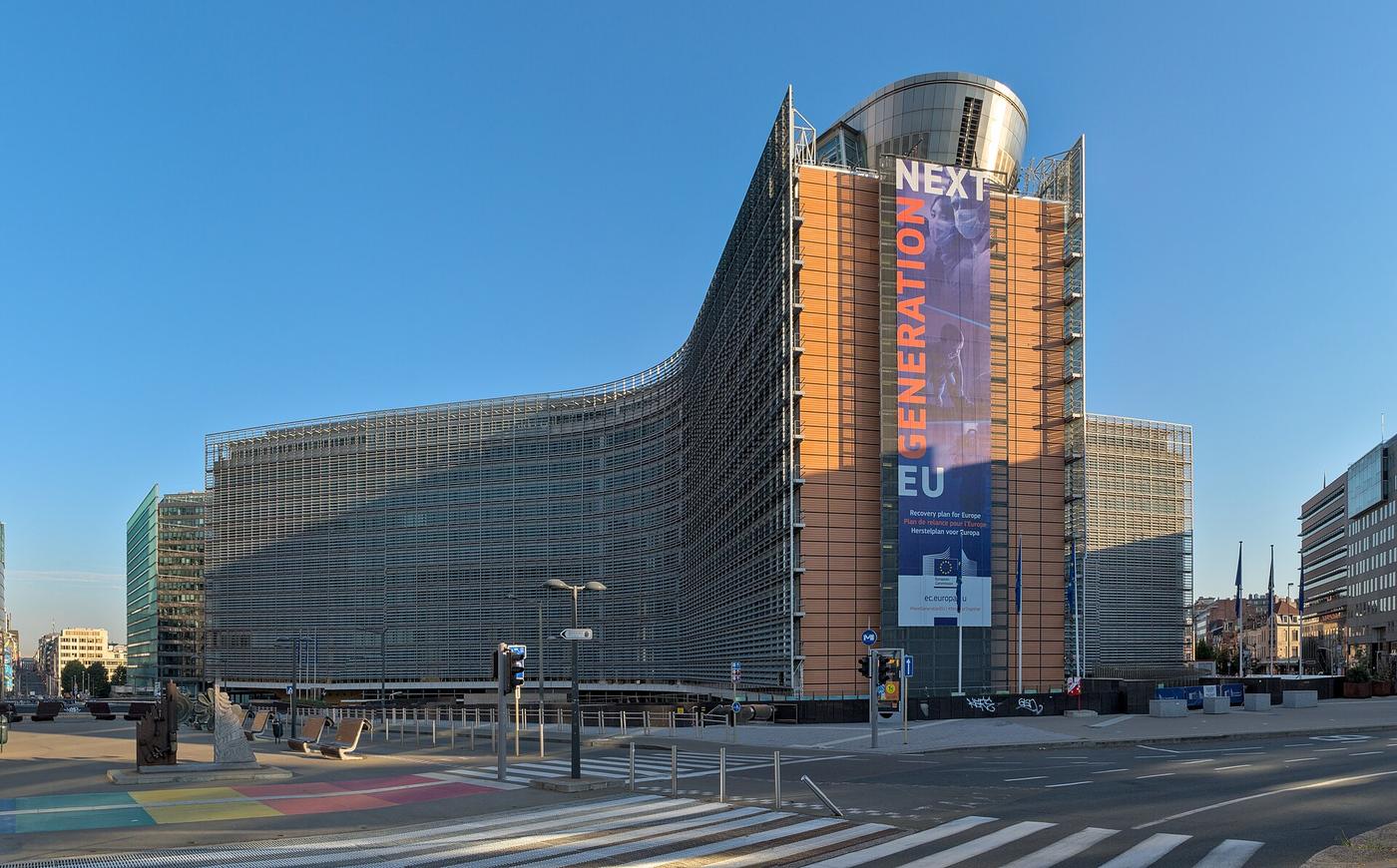
Photo credits: Berlaymont building, Benoit Brummer (Trougnouf), CC BY 4.0, Wikimedia Commons; MareNostrum 5, Steve Jurvetson, CC BY 4.0, Wikimedia Commons. Icons: Font Awesome Free (CC BY 4.0).
Related pages
- The deck notes on generative AI, governance and the EU AI Act
Public notes of a session of the Data Analytics course: GDPR and the AI Act from a manager's chair.
- ZeRegLens, an open-source reader for EU legal texts
A browser extension to read EUR-Lex texts article by article.
- The agent casebook
AI agents explained with primary sources, including the AI Act read from Luxembourg.
- DORA for US firms operating in Luxembourg
The financial-sector regime behind the exit-strategy line of this lecture (in English).
The guest lecturer
Sitraka Forler is a data and AI practitioner in Luxembourg. He teaches machine learning at Centrale Méditerranée (Centrale Marseille) and data courses at the IAE de Metz, and writes a monthly column for AGEFI Luxembourg. The lecture is given in a personal capacity. He thanks Roger Tafotie for the invitation.
Educational material, not legal advice. Nothing here represents the position of any employer. The state of play of legislative proposals is given as of 17 October 2026.